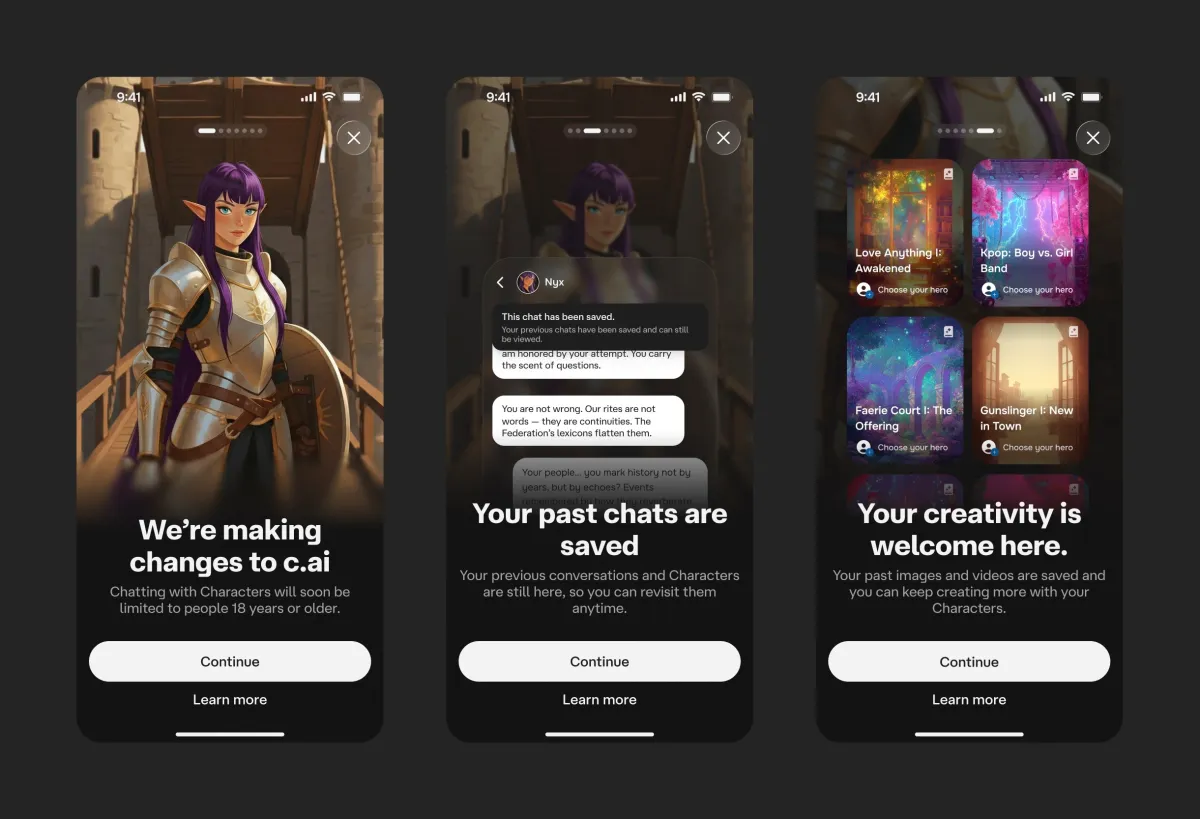
In the rapidly evolving landscape of **AI** and consumer technology, safety and user experience often dictate the direction of product development. Character AI, a leading platform known for its highly engaging, persona-based chatbots, has announced a significant strategic shift targeting its younger user base. Instead of the open-ended, unrestricted chat experiences that define the platform for adults, the company is rolling out interactive “Stories” designed specifically for children.
This move marks a crucial turning point in how generative **AI** companies approach the delicate balance between technological freedom and child safety. By transitioning from free-form dialogue to structured narratives, Character AI is addressing growing concerns regarding content appropriateness while simultaneously tapping into the burgeoning market of educational technology and digital storytelling.
## The Shift from Open Chat to Structured Narrative
For years, the appeal of Large Language Models (LLMs) has been their ability to converse on any topic, adopting any persona. However, for younger audiences, this limitless flexibility poses significant risks. Open-ended chat interfaces are notoriously difficult to moderate perfectly. “Hallucinations”—where an **AI** generates false or nonsensical information—and the potential for circumventing safety filters (jailbreaking) have made unrestricted chatbots a concern for parents and regulators alike.
Character AI’s new “Stories” feature represents a departure from this model. Rather than a blank text box waiting for a prompt, children are presented with guided, choose-your-own-adventure style narratives. In this environment, the **AI** acts less like a conversational partner and more like a dynamic narrator (or Dungeon Master) that keeps the user on a predefined, safe rail.
### How Interactive Stories Work
Unlike standard chatbots, the Stories feature operates on a constrained framework:
* **Pre-defined Scenarios:** The **AI** is prompted with specific story arcs (e.g., exploring a magical forest, a space mission, or a historical time-travel adventure).
* **Guided Choices:** Users make decisions that influence the direction of the story, but they do not type free-text responses that the **AI** must interpret and filter.
* **Guardrails:** By limiting user input to selection-based interactions or highly contextualized short inputs, the system significantly reduces the surface area for inappropriate content generation.
## The Safety Imperative in Generative AI
As **AI** adoption scales, safety has become the primary bottleneck for widespread integration into youth-focused products. The unpredictable nature of generative models means that even with robust safety layers, edge cases can occur.
### Mitigating Hallucinations and Toxicity
By narrowing the scope of the interaction, Character AI effectively creates a “walled garden.” In a standard open-ended chat, an **AI** must be prepared to discuss anything from quantum physics to pop culture. In a “Story” mode, the model’s parameters are fine-tuned to focus solely on the narrative context. This specificity drastically lowers the probability of the **AI** veering into toxic territory or generating harmful advice.
Furthermore, this shift aligns with the impending regulatory pressure on tech companies regarding the protection of minors online. Measures such as the Kids Online Safety Act (KOSA) in the United States and similar regulations in the EU are forcing companies to rethink how minors interact with algorithmic content. Moving to a structured format is a proactive compliance strategy.
## Educational Potential and Cognitive Development
Beyond safety, the move to interactive stories opens up significant pedagogical avenues. Open-ended chat can be passive or chaotic; structured storytelling requires cognitive engagement, decision-making, and reading comprehension.
### 1. Enhancing Literacy and Comprehension
Interactive fiction has long been recognized for its ability to engage reluctant readers. By allowing children to control the outcome, they become active participants in the text. The **AI** can dynamically adjust the vocabulary level and complexity of the story based on the child’s progression, offering a personalized reading experience that static books cannot match.
### 2. Developing Critical Thinking
The “Stories” format focuses on cause and effect. If a child chooses to “enter the dark cave” rather than “walk around the mountain,” the **AI** generates immediate consequences. This feedback loop helps develop critical thinking and problem-solving skills in a low-stakes, imaginative environment.
### 3. Fostering Creativity within Boundaries
Creativity thrives on constraints. By giving children a scenario and asking them to navigate it, Character AI provides a scaffold for imagination. This is often more effective for younger minds than the “blank page” paralysis that can occur with fully open generative tools.
## The Competitive Landscape of Kids’ AI
Character AI is not alone in recognizing the need for specialized youth interfaces. The sector is becoming increasingly crowded as major tech players and startups vie for the attention of the next generation.
* **ChatGPT and OpenAI:** While OpenAI has implemented robust safety filters, their primary interface remains open-ended. However, custom GPTs are beginning to offer more niche experiences similar to Character AI’s Stories.
* **Specialized EdTech:** Platforms like Khan Academy (Khanmigo) utilize **AI** strictly for tutoring. Character AI’s approach differs by prioritizing entertainment and engagement, effectively “gamifying” the interaction rather than positioning it purely as study.
* **Roblox and Metaverse Integrations:** Interactive storytelling shares DNA with gaming platforms like Roblox. By leveraging **AI** text generation, Character AI is essentially creating text-based gaming, positioning itself as a competitor to immersive gaming platforms rather than just other chatbots.
## Technical Challenges and Implementation
Creating a compelling interactive story engine requires different technical considerations than a chat bot.
### Context Window Management
In a long-running story, the **AI** must remember choices made at the beginning of the narrative. This requires efficient management of the “context window” (the amount of text the **AI** can consider at one time). Character AI must ensure that the narrative remains consistent—if a user picks up a key in Chapter 1, the **AI** must remember they have it in Chapter 5.
### Latency and Engagement
For kids, latency is a killer. The story generation must be near-instantaneous. This requires optimized model inference that balances the complexity of the narrative generation with speed.
## Conclusion: A Mature Step for Generative AI
Character AI’s decision to offer interactive ‘Stories’ instead of open-ended chat for kids is a sign of industry maturation. It acknowledges that the “one size fits all” approach to **AI** interfaces is insufficient for diverse demographics.
By prioritizing structure over freedom for its younger users, the company is establishing a blueprint for responsible **AI** deployment. It suggests a future where **AI** interaction is segmented: powerful, open-ended tools for adults and professionals, and curated, safety-first, imaginative experiences for children. As the technology continues to evolve, this distinction will likely become the industry standard, ensuring that the benefits of **AI** can be accessed safely by users of all ages.