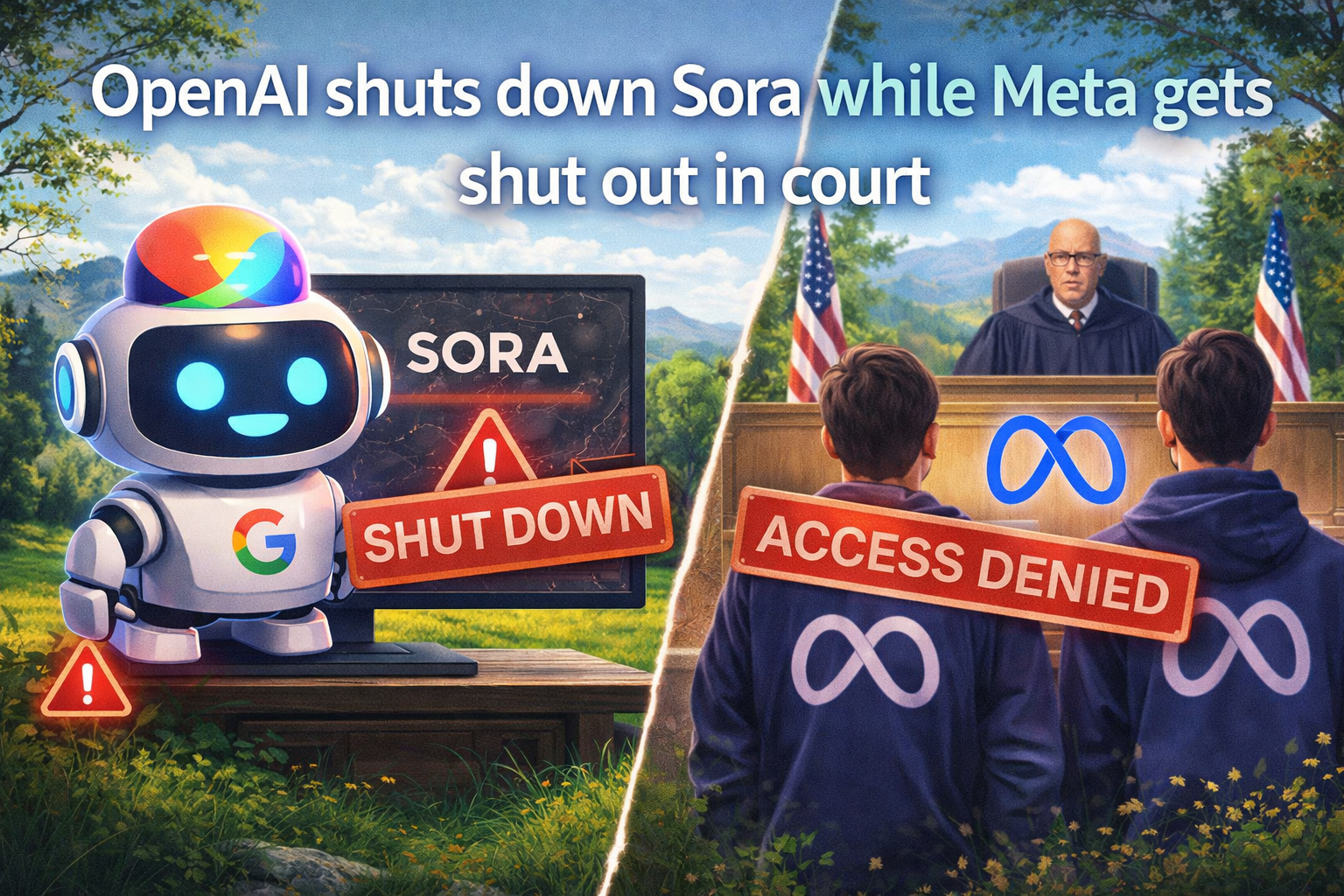
In a pair of seismic developments this week, the AI video generation landscape has shifted dramatically. OpenAI has quietly shut down its flagship video generation tool, Sora, while Meta faces a major legal setback in its bid to use copyrighted content for training its AI models. For video creators, YouTubers, and digital marketers, these events aren’t just tech news—they’re a wake-up call about the future of AI-powered content creation.
Why OpenAI Shut Down Sora: The Unspoken Reality Behind the Scenes
When OpenAI launched Sora in February 2024, the world was dazzled. Text-to-video generation that produced photorealistic, multi-second clips with complex physics and consistent object behavior? It felt like magic. Marketers immediately imagined personalized ad campaigns. YouTubers dreamed of generating custom thumbnails, transitions, and even mini-films without crews or cameras.
But just six months later, OpenAI quietly discontinued Sora’s public release. No grand announcement. No press release. Just a notice on their developer portal: “Sora is no longer available for public access while we refine its safety and scalability.”
Why? Three key reasons:
- Deepfake & Misuse Risks: Early internal tests revealed Sora could generate extremely convincing misinformation—politicians delivering false speeches, celebrities in compromising situations—far beyond what existing tools could produce.
- Computational Cost: Training and running Sora required vast GPU resources. OpenAI reportedly spent millions per month to serve even a small number of users. Scale was financially unsustainable.
- Lack of Control: Unlike image generation tools (like DALL·E) that operate within more defined boundaries, video generation allows users to simulate real-world events in ways that are harder to monitor, verify, or moderate.
For creators: This doesn’t mean AI video is dead—it means it’s entering a cautious, regulated phase. OpenAI is retooling Sora for enterprise and licensed partners only. If you’re a freelancer or indie creator, you’ll likely have to wait for alternatives… or adapt your workflow now.
Meta’s Legal Nightmare: When AI Training Crosses the Line
While OpenAI retreated, Meta took a hardline approach—only to get slapped down by a federal court.
In a landmark ruling, a U.S. district judge denied Meta’s motion to dismiss a lawsuit brought by Getty Images and other content creators. The plaintiffs accused Meta of scraping billions of copyrighted images and videos from the web—including from subscription-based platforms like Shutterstock and Adobe Stock—to train its AI image generation and video models (including Lumina and Make-A-Video).
The court found compelling evidence that Meta’s training data included protected works without license, attribution, or compensation. The ruling stated: “Use of copyrighted material to train commercial AI models is not automatically fair use, especially when the output competes directly with the original content.”
This decision has massive implications:
- For YouTubers: If you’ve used Meta’s AI tools to generate thumbnails, intros, or background visuals—there may be legal exposure. While liability currently targets the developer (Meta), downstream users aren’t immune in future lawsuits.
- For Marketers: Campaigns built on AI-generated visuals using unlicensed data may now carry intellectual property risk. Regulatory bodies like the FTC are already monitoring AI copyright compliance closely.
- For All Creators: This sets a precedent. If Meta can be held accountable, so can other platforms using similar training methods—including potentially OpenAI, Runway, and Stable Video.
What This Means for Your Content Strategy: 5 Action Steps
With Sora gone and Meta on the defensive, how do you stay ahead without risking legal trouble? Here’s your practical roadmap:
1. Ditch “Free” AI Video Tools with Shadowy Training Data
Many startups promise free AI video generation by scraping the internet. Avoid them. Stick to platforms that transparently disclose their training sources (e.g., stock libraries with licenses) or use proprietary, legally curated datasets.
2. Prioritize AI Image Generation for Now—But Be Cautious
While image generation tools like DALL·E 3, MidJourney, and Adobe Firefly are still widely usable, they’re not immune to legal scrutiny. Always:
- Use licensed prompts (e.g., “create a style inspired by…” rather than “simulate a Disney character”)
- Modify outputs significantly before commercial use
- Check tool Terms of Service for copyright indemnification clauses
3. Build Your Own Library—Human-Generated, Not AI-Synthesized
Invest in creating original B-roll, transitions, and motion graphics using real footage. Use platforms like Artgrid, Epidemic Sound, or Storyblocks. Why? Because you own it. No AI gray areas. No takedown risks. Your content becomes your asset.
4. Stay Tuned—But Don’t Panic
OpenAI may relaunch Sora under a paid enterprise model. Competitors like Pika Labs and Runway are already improving their video generators. The key is to avoid early adopter traps. Wait for industry-leading platforms to establish legal clarity before committing your campaigns.
5. Advocate for Ethical AI — and Protect Yourself
Support tools that pay creators for data contributions. Join creator coalitions pushing for AI transparency laws. And: Document your AI workflows. Keep records showing how you sourced assets, modified outputs, and ensured compliance. If questioned, you’ll have proof you did due diligence.
The Bottom Line: Ethics, Efficiency, and Exit Strategies
The days of “AI video for free, no questions asked” are over. OpenAI’s shutdown of Sora and Meta’s legal defeat aren’t setbacks—they’re signs of a maturing industry. Responsible innovation means protecting intellectual property, not circumventing it.
For video creators: Focus on tools that are open, transparent, and compliant—like Adobe Firefly (trained on licensed Adobe Stock) or Canva’s AI features (with royalty-free templates). For YouTubers: Use AI for ideation and editing, not for generating entire clips from nothing. For marketers: Build campaigns around original, human-created content augmented by AI, not replaced by it.
The future of video AI isn’t dead—it’s being rebuilt on legal, ethical foundations. The smartest creators won’t wait for the next shiny tool. They’ll build their workflows now—with integrity, foresight, and a clear understanding: if it feels too good to be true, it probably is.
Stay informed. Stay legal. Stay creative.